October 23, 2026
Roof rat or squirrel? How to tell what’s in your attic in South Florida
Short answer: If the noise is at night, it’s most likely a roof rat. If it’s in the early morning or late afternoon, a squirrel is more likely. Roof rats are active after dark, leave small, spindle-shaped droppings and squeeze through gaps about the size of a quarter. Squirrels are active during the day and usually chew larger, ragged holes near the roofline. Either way, the fix is the same order: confirm what it is, find how it’s getting in, then remove it and seal up.
Rodent calls pick up across Palm Beach County from about November through January, when nights cool off and roof rats look for shelter. Homeowners from Jupiter to Boca Raton tell us the same thing: “Something is running around in the ceiling.” Here’s how to narrow it down before you call anyone.
Listen to when the noise happens
Timing is the single best clue.
- Roof rats are nocturnal. Most activity starts after sunset and continues through the night. You may hear quick scurrying, scratching, or something rolling across the drywall.
- Squirrels are active during the day. Noise usually starts around sunrise and again late in the afternoon, then goes quiet at night. Their footsteps tend to sound heavier and more like thumping.
If you hear sounds at 2 AM, a squirrel is unlikely.
Look at the droppings
If you can safely look in the attic, garage or along a wall, droppings are the next clue. Wear gloves and a mask, and don’t sweep or vacuum droppings dry.
- Roof rat droppings are small (about half an inch), dark, and pointed at the ends, a bit like a grain of rice.
- Squirrel droppings are larger, rounder at the ends, and lighter brown. They’re often found in clusters near a nest.
Our rodent library page and our post on signs of a rodent problem have more photos and tips.
Find the entry point
Walk around the outside of the house in daylight and look up.
- Roof rats need a gap about the size of a quarter. Check soffit gaps, roof vents, the space where the roof meets the fascia, A/C line penetrations, and garage door corners. Look for dark rub marks on edges they use often.
- Squirrels chew bigger, ragged openings, usually at roof corners, gable vents and soffits near trees.
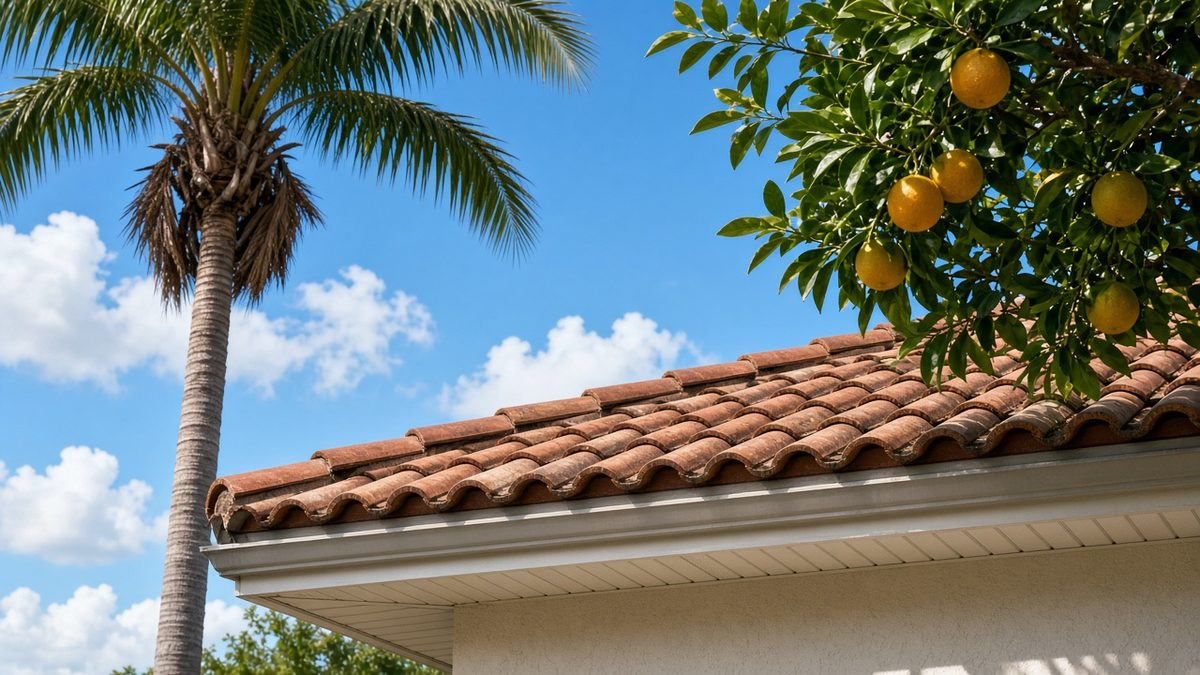
In South Florida, roof rats often travel along palm fronds, fruit trees, power lines and fences that touch the roof. If a tree branch rests on your roofline, that’s a highway.
Why roof rats are so common here
Roof rats are excellent climbers, and our landscaping gives them food and cover all year: palm trees, fruit trees, bird feeders, pet food left outside and dense hedges. Older homes in West Palm Beach, Lake Worth Beach and Delray Beach often have more roofline gaps, while newer communities in Wellington and Palm Beach Gardens can still have gaps around vents and utility lines.
What to do next
- Don’t use poison bait in the attic yourself. A rodent that dies inside a wall or ceiling can cause odor problems, and bait can be a risk to pets and wildlife.
- Trim trees and palms back from the roofline where you can.
- Remove easy food: pick up fallen fruit, bring pet food inside at night and keep garbage cans closed.
- Get an inspection. A trained technician can confirm the animal, find every entry point and recommend trapping and sealing. Sealing too early can trap an animal inside, so order matters.
If it turns out to be a squirrel or other wildlife, we’ll tell you so and coordinate the right solution.
How we handle roof rats
Our approach is inspect first, then treat smart. We confirm the pest, map entry points and activity, set traps in the right places, and recommend sealing once activity stops. We’ll also point out conditions around the yard that attract rodents. Learn more about our residential pest control.
Frequently asked questions
What time of year are roof rats most active in Palm Beach County?
They’re around all year, but calls usually increase from about November through January, when cooler nights push them into attics.
Can roof rats get into a house with a tile roof?
Yes. They often get in at gaps where the tile meets the fascia, around roof vents, and along utility lines rather than through the tiles themselves.
Are the noises in my wall rats or something else?
They could be rats, squirrels, or even insects or settling sounds. Timing, droppings and entry points help narrow it down, and an inspection confirms it.
Should I seal the holes right away?
Not until you know the animal is out. Sealing an active entry can trap a rodent inside. Trapping comes first, then sealing.
Do you offer complimentary inspections for rodents?
Yes. Call (561) 725-5274 or book on our contact page.
Request a complimentary inspection
Book a complimentary inspection and we’ll share what we find, explain your options and recommend a plan for your home.
Request a complimentary inspection: qandlpest.com/contact-us/ · (561) 725-5274
Office hours: Mon–Fri 8:00 AM–4:00 PM.
Inspect first. Treat smart.
About the author
Michael Ringler, Q and L Pest Management. Q and L Pest Management is a family-owned pest control company based in Lantana and serving Palm Beach County since 2022.Q and L Pest Management LLC holds FDACS Pest Control Business License #JB333443. Services are performed under FDACS Certified Pest Control Operator John Park, certificate #JF320165.