Home › Residential › Termite Control
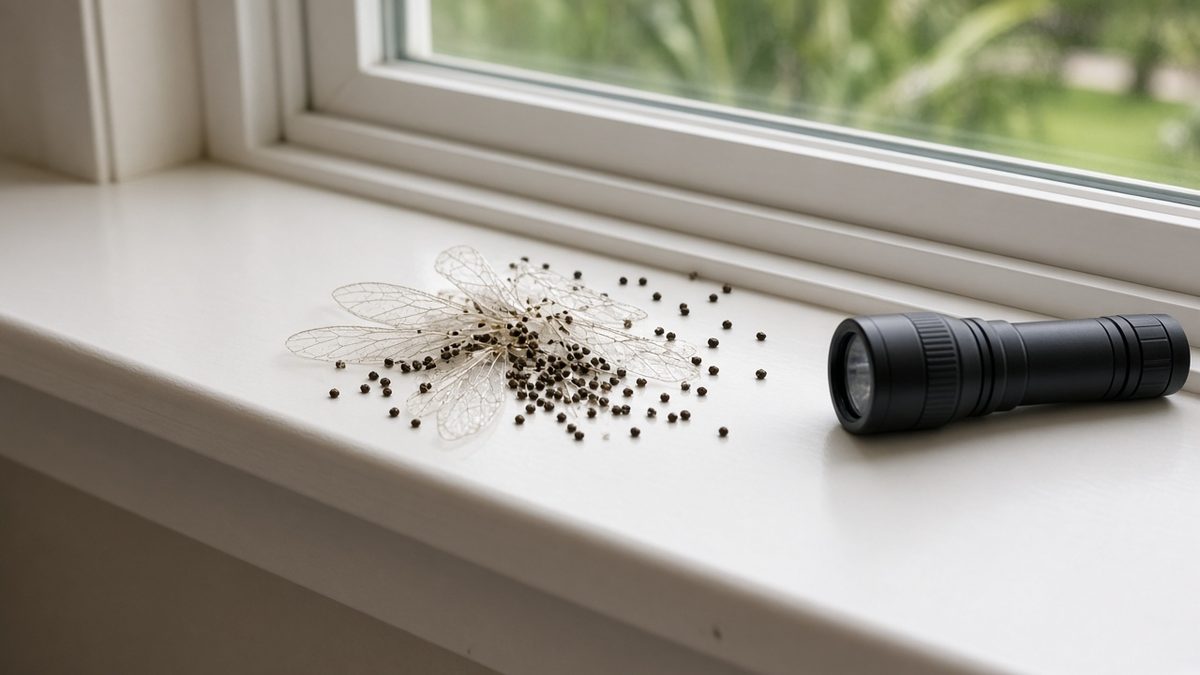
If you find piles of small wings or tiny pellets near a window, door or baseboard, have your home inspected before you treat anything. Palm Beach County homes face four problem termites: drywood, Asian subterranean, Formosan subterranean and native subterranean. Drywood termites are handled with tent fumigation or a localized treatment. Subterranean termites are handled with a liquid soil treatment or a termite baiting system. We identify the termite first, then explain the options for your home.
Termites swarm at different times of year depending on the species, and many homeowners don’t know they have an active colony until they find wings piled up on a sill. Ants swarm too, and the two are easy to confuse, so a professional identification is the first step.
Our termite treatment options
| Service | What it treats | How it works |
|---|---|---|
| Tent fumigation | Drywood termites throughout the house | The whole structure is tented and fumigated, so hidden colonies in walls and framing are treated at once. One-time service with an optional annual renewal. |
| Subterranean termite treatment (liquid) | Subterranean termites coming from the soil | A continuous treated zone in the soil around and under the home, applied by trenching and rodding, and drilling where needed. |
| Termite baiting system | Subterranean termites | BASF Trelona bait stations installed in the ground around the home and checked on a monitoring schedule, with an annual renewal. |
| Localized (spot) treatment | Small, easy-to-reach drywood activity | A targeted treatment of the affected wood when the activity is limited and accessible. |
| Pre-construction termite treatment | New homes and additions | A soil treatment applied during construction, before the slab is poured. |
Signs of termites in a house
- Piles of discarded wings near windows, doors or light fixtures.
- Small, hard pellets (frass) collecting below wood trim, furniture or ceilings, a sign of drywood termites.
- Mud tubes on the slab, foundation or garage walls, a sign of subterranean termites.
- Wood that sounds hollow, blistered paint or doors and windows that suddenly stick.
Our guides to termite signs in Palm Beach County and drywood vs. subterranean termites explain the differences in more detail.
Drywood vs. subterranean termites
Drywood termites live entirely inside the wood they eat. They don’t need soil contact, so they can turn up in attics, furniture, trim and framing anywhere in the house. When the activity is widespread or hidden, tent fumigation treats the whole structure at once. When it’s small and easy to reach, a localized treatment may be enough.
Subterranean termites, including the invasive Formosan and Asian species, live in the soil and need moisture. They enter through wood that touches the ground, through expansion joints and cracks in the slab, and along plumbing. They’re handled from the soil side, with a liquid treatment or a baiting system around the home.
How we handle termites in your home
Identify the species and the extent
We inspect the attic, garage, trim, windows, slab and exterior to identify the termite and how far the activity reaches.
Recommend the right method
We explain which of the options above fits your termite and your house, what each one involves and how to prepare, and you get our recommendation in writing before any treatment.
Monitoring and renewals
Baiting systems are checked on the monitoring schedule in your agreement, and every visit is noted on a written service report.
Preventing termites around your home
- Keep wood, mulch and firewood from touching the foundation, and keep soil below the slab edge.
- Fix leaks and drainage problems near the foundation. Subterranean termites follow moisture.
- Have new wood inspected before it goes into a remodel.
Related services and reading
Serving Palm Beach and Broward Counties
We provide termite treatment in Boca Raton, termite treatment in Jupiter Farms and termite treatment in Oakland Park. From our base in Lantana we also serve Lantana, Lake Worth Beach, Boynton Beach, Delray Beach, West Palm Beach, Jupiter, Palm Beach Gardens, Wellington, plus dozens of other communities in Palm Beach and Broward counties. See all 49 service areas.
Termite control for homes FAQ
Will termites from my neighbor’s tenting move to my house?
It’s a common worry. Our article on neighbors tenting for termites explains the risk and when an inspection makes sense.
Do I always need to tent for drywood termites?
No. Small, localized drywood activity can often be treated directly. Tenting is usually recommended when activity is widespread or hard to reach. The inspection tells us which applies.
Does tenting treat subterranean termites?
No. Tent fumigation treats drywood termites inside the structure. Subterranean termites come from the soil and need a liquid treatment or a baiting system.
How do subterranean termites get into a house?
Usually from the soil, through wood that touches the ground or through expansion joints and cracks in the slab. Moisture near the foundation makes it more likely.
Do you also treat termites for businesses and condos?
Yes. See commercial termite control and termite programs for associations and property managers.
Book a complimentary inspection
We’ll share what we find and recommend a plan. Office hours: Monday to Friday, 8 AM to 4 PM.
Q and L Pest Management LLC · FDACS Pest Control Business License #JB333443 · Inspect first. Treat smart.